5 August 2026 · Sara Marugan
The film Thirteen Days
This article was machine-translated from Sara's Catalan original. The writing is hers; the translation has not been reviewed by a person. Read the Catalan original →
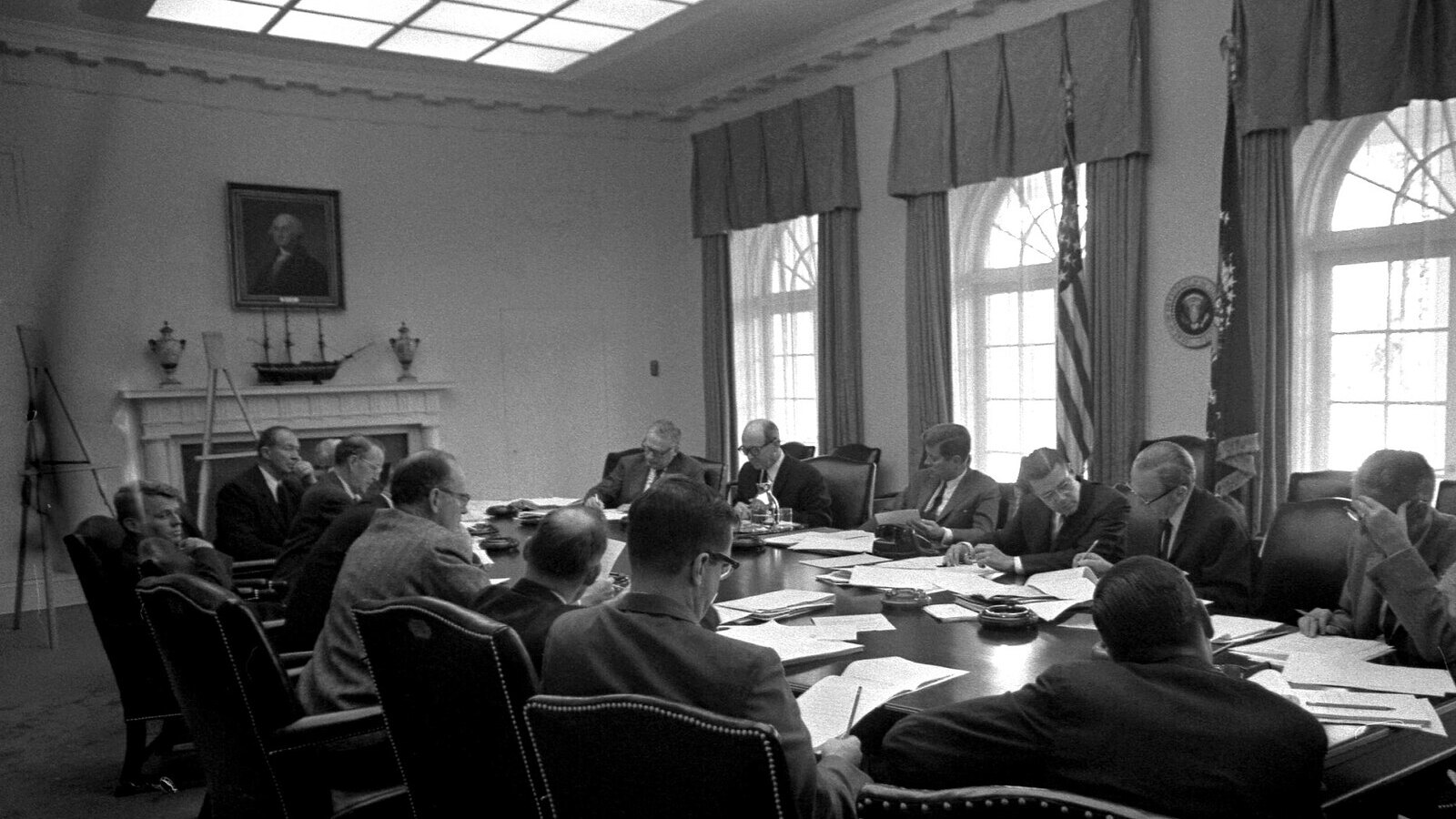
Thirteen Days is a historical thriller based on real events, directed by Roger Donaldson in 2000 and drawn from the Cuban missile crisis of the early 1960s, during the Cold War. The film shows the tension left behind by the Second World War: from that point on, the world was polarised between communist and capitalist powers.
On one side stood the communist bloc led by Nikita Khrushchev, who had recently become First Secretary of the Soviet Union, in 1953, after Stalin's death. On the other stood the American capitalist bloc, led by John F. Kennedy, also newly elected president in 1960, who won by a narrow margin: his opponent, Richard Nixon, fell only some 118,000 votes short.
The situation in the early 1960s was clearly one of mutual distrust. Circumstances then worsened with the Cuban Revolution, in which Fidel Castro installed a communist regime on the island. The United States, which saw communism as a danger to society, suddenly found that threat on its doorstep. Shortly afterwards, the US government concentrated on devising a strategy to bring down Castro's state. The result was the American plan to invade the Bay of Pigs, backing a group of armed Cuban exiles. In the end the Americans pulled back in time to avoid open war.
On the other side of the world, the Soviet Union was exposed to nuclear attack because the Americans had installed missiles in Turkey. In response, the USSR used the situation in Cuba to place nuclear weapons there. That is where the film's in medias res plot begins. The two powers, once allies in the Second World War, now face the tension of a nuclear conflict. Along the way there are various rounds of negotiation, and even a renewed possibility of occupying Cuba.
Personally, I think the film is quite faithful to the historical record — for instance in the scene where Kennedy meets the army generals, who advise invading Cuba. I also find it very interesting that Kennedy's adviser rejects the proposal, given that the generals simply wanted blood after losing face in the failed Bay of Pigs invasion. Another mark of historical accuracy is the moment when Bobby and Kenny stop outside the Soviet embassy in Washington DC, a scene defined by the smell of smoke and burning: it stands for all the sensitive documents being destroyed as the Soviet Union prepared for war.
In my view, many of the decisions the protagonist takes are genuinely rational and defensible. Like many others, he does not let himself be carried away by emotion and is guided by the information his advisers give him. From there, and with the support of the committee of generals and diplomats, he takes decisions that keep the country out of war while still defending its interests. Sadly, the President of the United States does not spend enough time with his family, sacrificing himself politically and for the common good.
For me personally, the film stirred a feeling of American patriotism and an indiscriminate hatred of communism. I think that shows how American a perspective Thirteen Days gives us of the whole affair. I would still recommend watching it, because it captures the situation of the period — but it must be said that the Americans are shown as heroes when in reality they were as responsible for the situation as the Soviets. If I could add one thing to the film to open up another perspective on the conflict, I would have liked to see the Soviet reaction during the naval blockade, or Khrushchev writing his letter to Kennedy during the negotiations.