5 August 2026 · Sara Marugan
The Crash of 1929
This article was machine-translated from Sara's Catalan original. The writing is hers; the translation has not been reviewed by a person. Read the Catalan original →
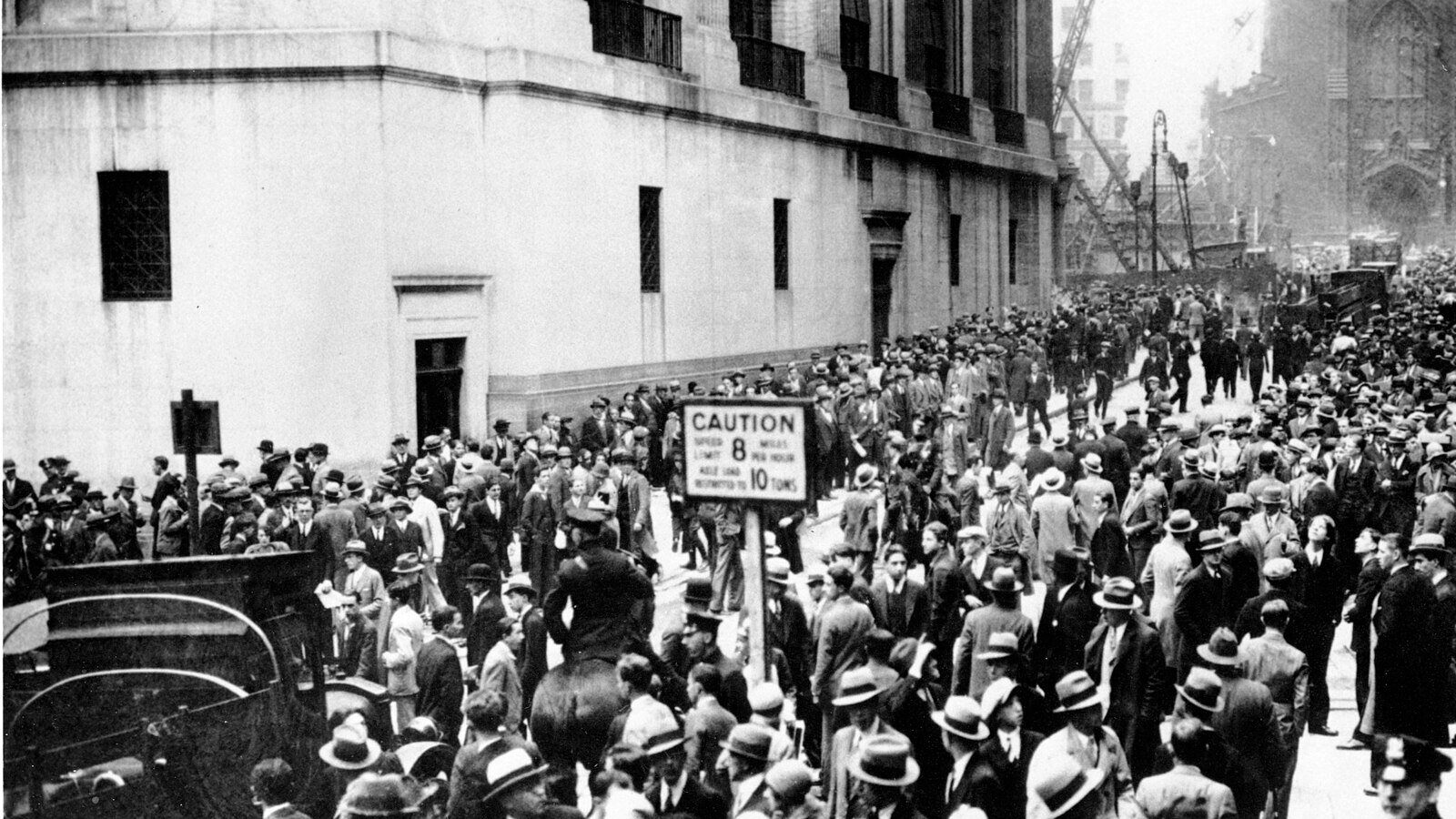
The Crash of 1929 was an economic crisis that began that year in the United States, lasted a decade and affected the great majority of the world's countries, from the most industrialised to the poorest. The difficulty of escaping it led many governments to consider changing the financial structure altogether, since they no longer trusted the market's ability to return to its natural balance. All this happened against a background of growth and prosperity brought by the Industrial Revolution, when new machines and new ways of making money were appearing.
The period also saw large exchanges of resources between countries: goods moved around the world and any product could reach anywhere, which drove a boom in buying and selling and created a new economic dynamic. The Crash of 1929 was not, however, the first major economic crisis: the 19th century had seen a series of very similar ones, such as Black Friday, a financial crisis caused by the speculative manoeuvres of James Fisk and Jay Gould, two financiers who tried to keep the government's gold off the market in order to drive its price up. They managed it through political influence, including help from Abel Corbin, brother-in-law of the president of the day, Ulysses S. Grant.
The causes
- By the late 1920s, farm output and construction were stagnating, which brought consumption down. At the same time, industrial firms favoured by easy credit began producing more than the market could absorb.
- Falling sales of industrial goods brought a wave of lay-offs. Unemployment in the United States reached 30% of the population, driving consumption down further still.
- Faced with rumours of heavy losses at many firms, investors decided to sell the shares whose value had risen in previous years. That sudden sell-off sent prices crashing.
- Collective panic led people to withdraw their savings, and the banks could not return the money. As small banks began to fail they dragged the large ones down with them, and international subsidiaries followed.
The consequences
- Consumption of industrial goods fell, closing many firms left without demand.
- As industrial consumption shrank, unemployment rose worldwide.
- The United States owed a great deal of money to everyone, its own population and other countries alike, and spent four years in negative economic territory.
- European countries that needed and received American credit stopped receiving it.
- Poverty and unemployment rose across the world.
- The terms of capitalist economics were rethought, since the American state had to step in to restart the economy. New forms of capitalism emerged, with greater state intervention in price controls, credit, job creation and so on.