15 September 2026 · Sara Marugan
The .cat domain turns 20 — and this site is one of 118,000
This article was machine-translated from Sara's Catalan original. The writing is hers; the translation has not been reviewed by a person. Read the Catalan original →
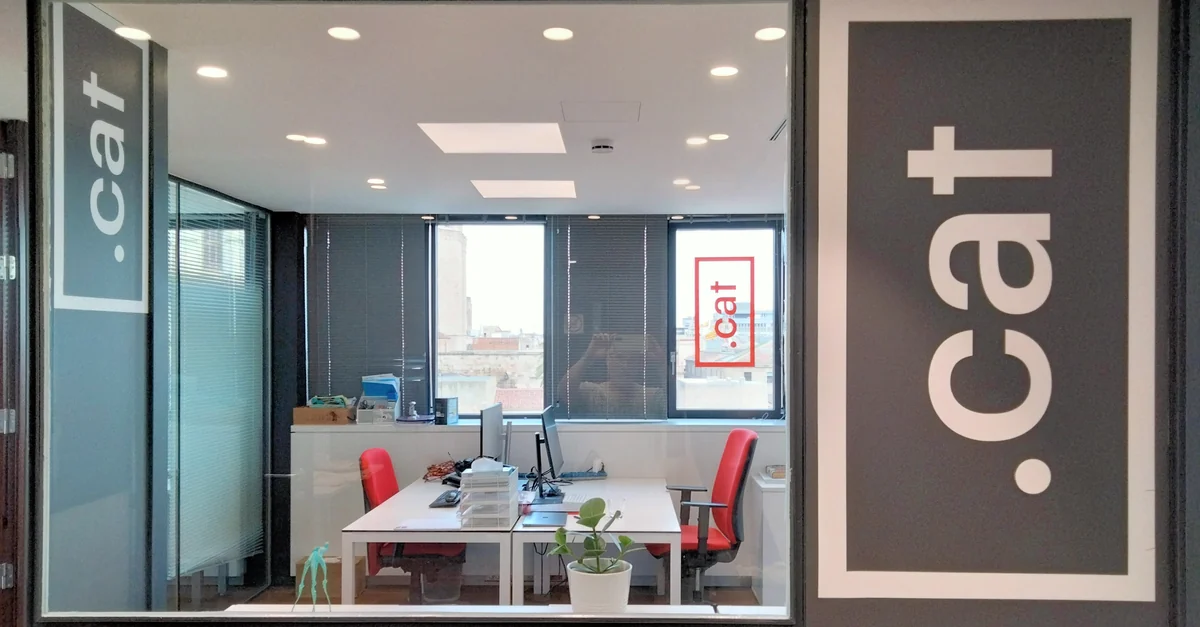
In 2005 the Catalan community obtained something from ICANN —the body that decides what things are called on the internet— that had never been done anywhere: a domain of its own for a language and a culture, rather than for a state. That is how .cat was born. Twenty years on, more than 118,000 companies, institutions and individuals use it.
The anniversary was celebrated this September in the Sala Gran of the Maritime Museum of Barcelona, with more than 550 people. The speakers included Genís Roca, president of Accent Obert —the foundation that runs the domain, until recently called Fundació puntCAT— and the Catalan minister for language policy, Francesc Xavier Vila. There was also a round table with Teresa Cabré, of the Institut d'Estudis Catalans; Rosa Romà, of 3Cat; Elena Fort, of FC Barcelona; and Núria Ribas, of Amical Wikimedia.
Why this address ends in .cat
When I set up this site, choosing .cat was not a technical decision. I teach Catalan: the address where I explain it had to end in .cat. And every year, when the renewal notice arrives, I renew it without a second thought.
This spring the .cat team wrote to those of us who hold a domain, to thank us and to invite us to celebrate the twenty years together. They said something that is rather good to read when you have spent years paying a renewal fee without anyone noticing: that without the people who are there year after year, .cat would not be what it is.
And they are right, I suppose. A domain is not much: four letters at the end of an address. But they are the four letters that say, before anyone has even opened the page, which language the work is done in here.
Photograph: Accent Obert's offices on Plaça Nova, Barcelona. Author: Enric. Licence CC BY 4.0, via Wikimedia Commons.