4 September 2026 · Sara Marugan
A workshop on troubadour literature at Lluïsos de Gràcia
This article was machine-translated from Sara's Catalan original. The writing is hers; the translation has not been reviewed by a person. Read the Catalan original →

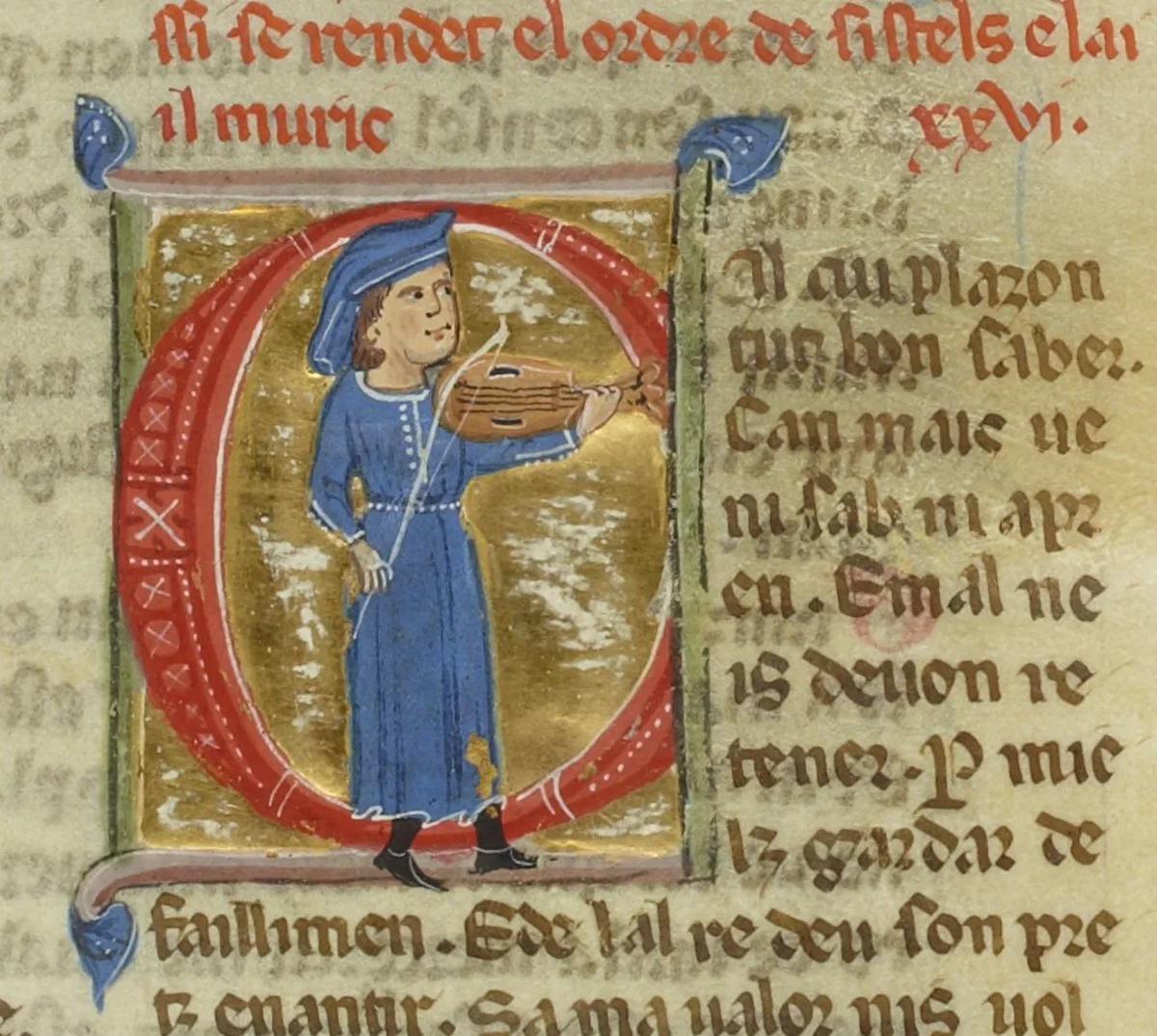
Troubadour literature was born in the 12th and 13th centuries in the south of present-day France. Troubadours were learned poets who composed both words and music, and they did so in Occitan, the Romance language of Occitania.
Their main subject was fin'amor, or courtly love: an idealised game of courtship. In it, the poet declared himself the vassal of a married, unattainable lady. To protect her honour he used a pseudonym, or senhal, in his verses. They also had to dodge the lauzangiers, the court gossips who were out to expose them.
These songs were performed by joglars, the travelling musicians and entertainers of the day. That is how troubadour literature became a decisive legacy that transformed love poetry across Europe, and its influence is still with us.
Would you like to come and enjoy it? I hope to see you there.
Date: Tuesday 15 September, 6 pm
Length: 1 hr 30 min
Venue: Lluïsos de Gràcia (plaça del Nord, 7, Barcelona)
Col·lectiu Minerva announced it like this:
«La nostra sòcia i Minerva Sara Marugan Oliva, professora de català i autora del recentment publicat llibre Ramon Llull com mai te l'han explicat, durà a terme, el proper 15 de setembre a les 18.00 h, als Lluïsos de Gràcia, un taller cultural gratuït i obert a tota persona interessada en la temàtica, sobre la poesia i la lírica trobadoresca.»
(In Catalan in the original: "our member and Minerva Sara Marugan Oliva, a Catalan teacher and the author of the recently published book, will run a free cultural workshop on troubadour poetry and lyric on 15 September at 6 p.m. at Lluïsos de Gràcia, open to anyone interested in the subject.")
The workshop is organised by Banc del Temps de Gràcia. Details and sign-up are on the agenda of [Col·lectiu Minerva — Dones Creadores de Gràcia](minervadonescreadoresdegracia.cat/activitats/taller-de-literatura-trobadoresca/).
Image: the troubadour Perdigon, in a 13th-century Occitan songbook (BnF, ms. 854, f. 49). Public domain, via Wikimedia Commons.