5 August 2026 · Sara Marugan
Barcelona's Three Hills
This article was machine-translated from Sara's Catalan original. The writing is hers; the translation has not been reviewed by a person. Read the Catalan original →
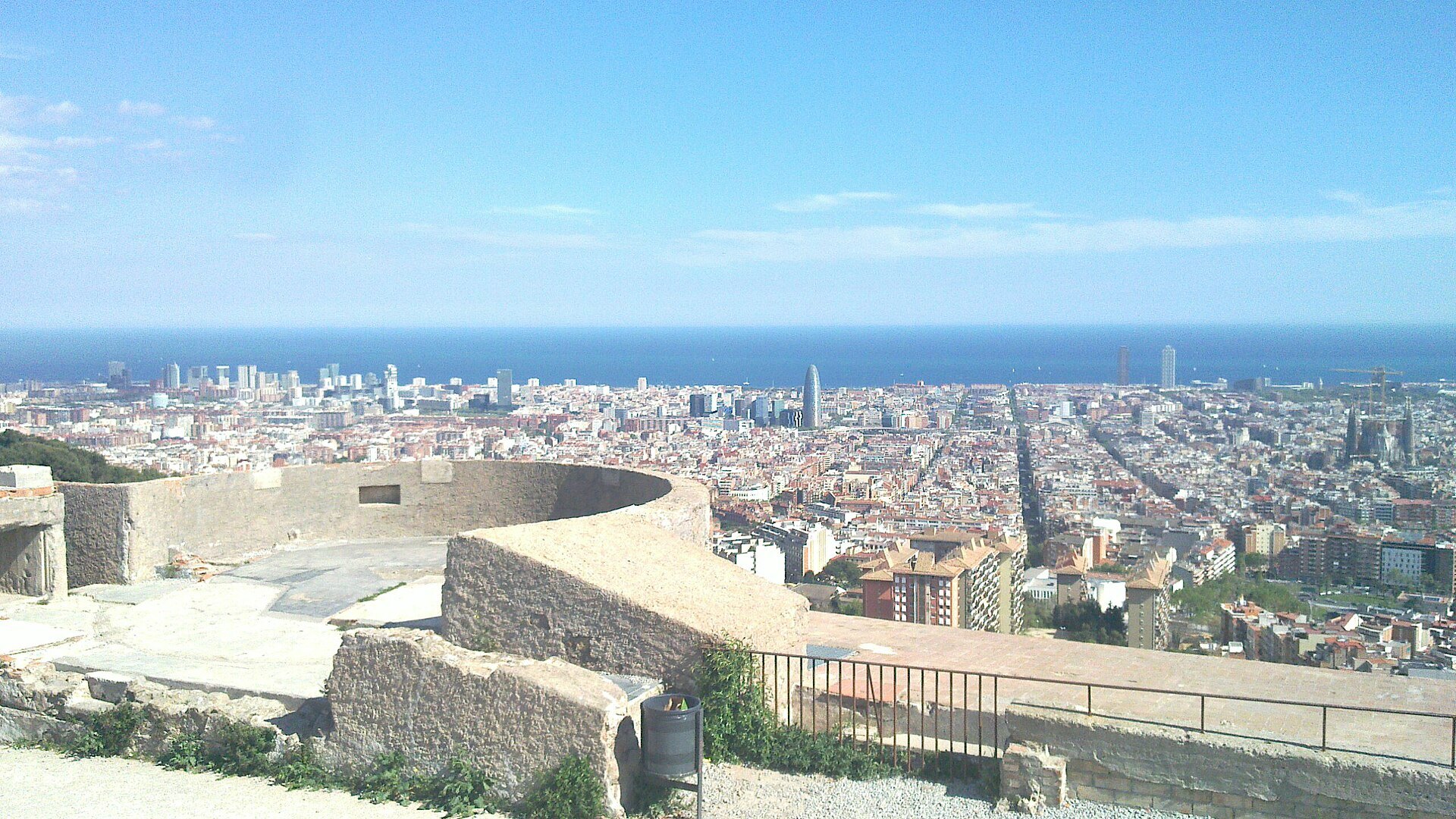
A walk across Barcelona's three hills: nature, history and culture in four stages, linking viewpoints, characterful neighbourhoods and publishing history in the heart of the city.
- Start: Parc de la Creueta del Coll
About: This park sits in a former quarry in the Coll neighbourhood, turned into green space in 1987. Its highlights are the large pond, which works as a public pool in summer, the picnic areas and a monumental sculpture by Eduardo Chillida called Elogi de l'aigua.
Useful details:
Address: Pg. Mare de Déu del Coll, 77
Area: 1.68 ha
Wheelchair accessible
Story: The park was part of Barcelona's programme to reclaim abandoned industrial sites. Its transformation is a symbol of the urban revival of the 1980s.
- Stage 1: Joan Sales viewpoint
About: On the Turó del Carmel, this viewpoint gives a panorama of Barcelona from the Llobregat delta to the Maresme coast. It is also known as the Virolai viewpoint.
Useful details:
Reached by the Camí de Can Mora or from Park Güell
Landmarks in view: Sagrada Família, Tibidabo, Hotel Arts
Story: It is named after the writer Joan Sales, author of Incerta glòria, and is a regular walking spot for local residents.
- Stage 2: Bar Delicias (Carrer de Mühlberg, 1)
About: An emblematic bar in the Carmel neighbourhood, founded in the 1950s. Traditional cooking and tapas in a family atmosphere.
Useful details:
Mentioned in Juan Marsé's novel Últimas tardes con Teresa
Mural: Carrer Santuari
Story: In the post-war years it was the meeting point for people living in the self-built shacks on the hillside. It still keeps that neighbourhood spirit.
- Stage 3: Mühlberg bridge
About: Built in 1991 to span the gap left by the quarries of the Turó de la Rovira. It joins two parts of the Can Baró neighbourhood and offers spectacular views.
Useful details:
Length: 70 metres
Height: 261 metres above sea level
Story: It was built in barely a week. It is a quieter alternative to the famous Carmel bunkers, and a good place to enjoy the city without the crowds.
- End: Font d'en Fargues
About: A residential neighbourhood founded in 1905 as a garden city, promoted by Pere Fargas i Sagristà. It takes its name from a spring of very good water, around which popular festivals were held.
Useful details:
Can Fargues farmhouse: a historic 14th-century building
Architecture: modernisme and summer-house turrets
Story: In the post-war years it was a destination for family outings by tram. Its calm earned it the nickname of the «Pedralbes» of the Horta-Guinardó district.
- Extra: the story of Editorial Bruguera
Where: The original premises stood next to Parc de la Creueta del Coll, today the El Coll – La Bruguera civic centre.
A short history:
Founded in 1910 as El Gato Negro, it became the most influential comics publisher in Spain during the 1960s and 70s.
It published titles such as Pulgarcito, Tío Vivo, Mortadelo y Filemón, Zipi y Zape and Capitán Trueno.
Its bond with the neighbourhood was so close that many residents worked on its presses, or remember the paper lorries climbing the streets of El Coll.
Today: the Projecte Bruguera, at the civic centre, keeps that memory alive through cultural events and the testimony of former workers.
Cover photo: «View of Barcelona from the Turó de la Rovira», by Toniher (Wikimedia Commons, CC BY-SA 3.0).